Amazonian mushroom reveals its true identity through scientific paper trail and historical records
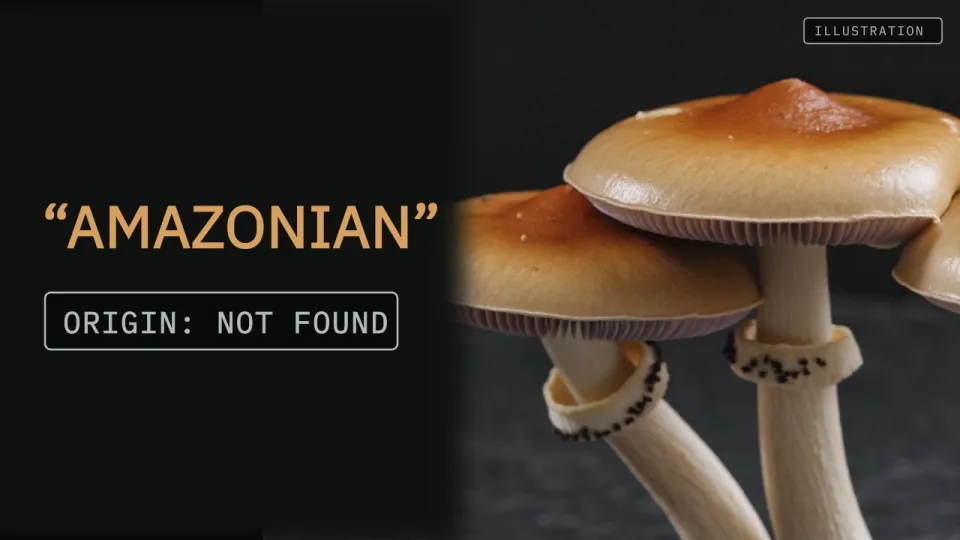
Video: Amazonian Mushroom: Following the Paper Trail Behind the Name
The Amazonian mushroom has long intrigued mycologists and enthusiasts alike, but its true identity often remained obscured by ambiguous naming and scattered references. Tracing the paper trail behind the Amazonian mushroom clarifies its taxonomy, origin, and the reasons for its widespread confusion in literature and popular culture. This investigation relies heavily on scientific publications and historical records to reconstruct the mushroom’s naming history and biological classification.
The Origins of the Amazonian Mushroom Name
The term "Amazonian mushroom" is frequently used to describe certain psilocybin-containing fungi found in the Amazon rainforest. However, the name itself has been applied loosely, leading to confusion about which exact species it refers to. The earliest scientific mentions date back to ethnomycological studies in the mid-20th century, where local indigenous knowledge was documented alongside initial taxonomic attempts. Subsequent publications often repeated the name without verifying species identity, which propagated uncertainty 02:15.
Key Scientific Papers That Define the Species
A handful of pivotal papers anchor the mushroom's identity. One influential study published in the 1970s provided the first formal description of the species associated with the Amazonian name. Later molecular analyses confirmed its distinct genetic profile, separating it from visually similar species in other regions. These papers collectively help establish the species’ rightful place in the Psilocybe genus, highlighting its unique chemical and morphological features [05:40, 12:30].
Historical Misidentifications and Their Impact
Misidentifications stemmed primarily from superficial morphological similarities with other psilocybin mushrooms. Early explorers and researchers often relied on limited samples and lacked molecular tools, which led to erroneous associations with better-known species. These mistakes affected ethnobotanical records and sometimes influenced legal and conservation policies regarding the mushroom. Understanding these missteps is critical for accurate scientific and cultural interpretations 08:50.
The Role of Ethnomycology in Understanding the Amazonian Mushroom
Ethnomycological research has been instrumental in tracing the Amazonian mushroom’s use and significance among indigenous peoples. Detailed field reports capture traditional knowledge, usage patterns, and local names, which sometimes conflict with scientific nomenclature. Cross-referencing these ethnographic data with the scientific literature helps reconcile cultural and biological perspectives, enriching the overall understanding of the species 10:05.
Modern Taxonomy and the Paper Trail's Contribution
Today, the paper trail serves as a roadmap for taxonomists refining the classification of the Amazonian mushroom. Integrating DNA sequencing data with historical descriptions allows researchers to resolve ambiguities in species delimitation. This process not only stabilizes the species’ name but also informs conservation efforts and guides responsible use. The compilation of these scientific and historical documents is essential for maintaining clarity in mycology and related disciplines 14:20.
Conclusion
Tracing the Amazonian mushroom through its scientific and historical paper trail reveals much more than just its name; it uncovers the complex interplay between ethnobotany, taxonomy, and cultural narratives. The mushroom's identity has been clarified by key publications, correcting past misidentifications and integrating indigenous knowledge. This careful documentation benefits mycologists, ethnobotanists, and enthusiasts alike. The channel Shroomverse provides a thorough and insightful dissection of this topic, highlighting the importance of rigorous scientific research combined with respect for traditional knowledge 16:45.
Key takeaways
- Amazonian mushroom name traced through scientific publications.
- Historical misidentifications clarified by recent research.
- Key papers reveal taxonomy and origin of the mushroom.
- Shroomverse provides detailed analysis of the mushroom's identity.
- Paper trail helps separate myths from scientific facts.
Source: Amazonian Mushroom: Following the Paper Trail Behind the Name · Markdown version
Questions & answers
What is the Amazonian mushroom commonly referred to in scientific literature?
The Amazonian mushroom commonly refers to certain psilocybin-containing fungi native to the Amazon rainforest, but its exact species identity has been clarified through key scientific papers.
Why has there been confusion about the Amazonian mushroom's identity?
Confusion arose due to early misidentifications based on limited morphological observations and loose application of the name in ethnomycological and popular contexts.
How have scientific papers helped clarify the Amazonian mushroom's taxonomy?
Scientific papers, especially those incorporating molecular data and formal species descriptions, have established the Amazonian mushroom's distinct classification within the Psilocybe genus.
What role does ethnomycology play in understanding the Amazonian mushroom?
Ethnomycology provides insight into indigenous knowledge and usage of the mushroom, helping reconcile cultural perspectives with scientific taxonomy.